
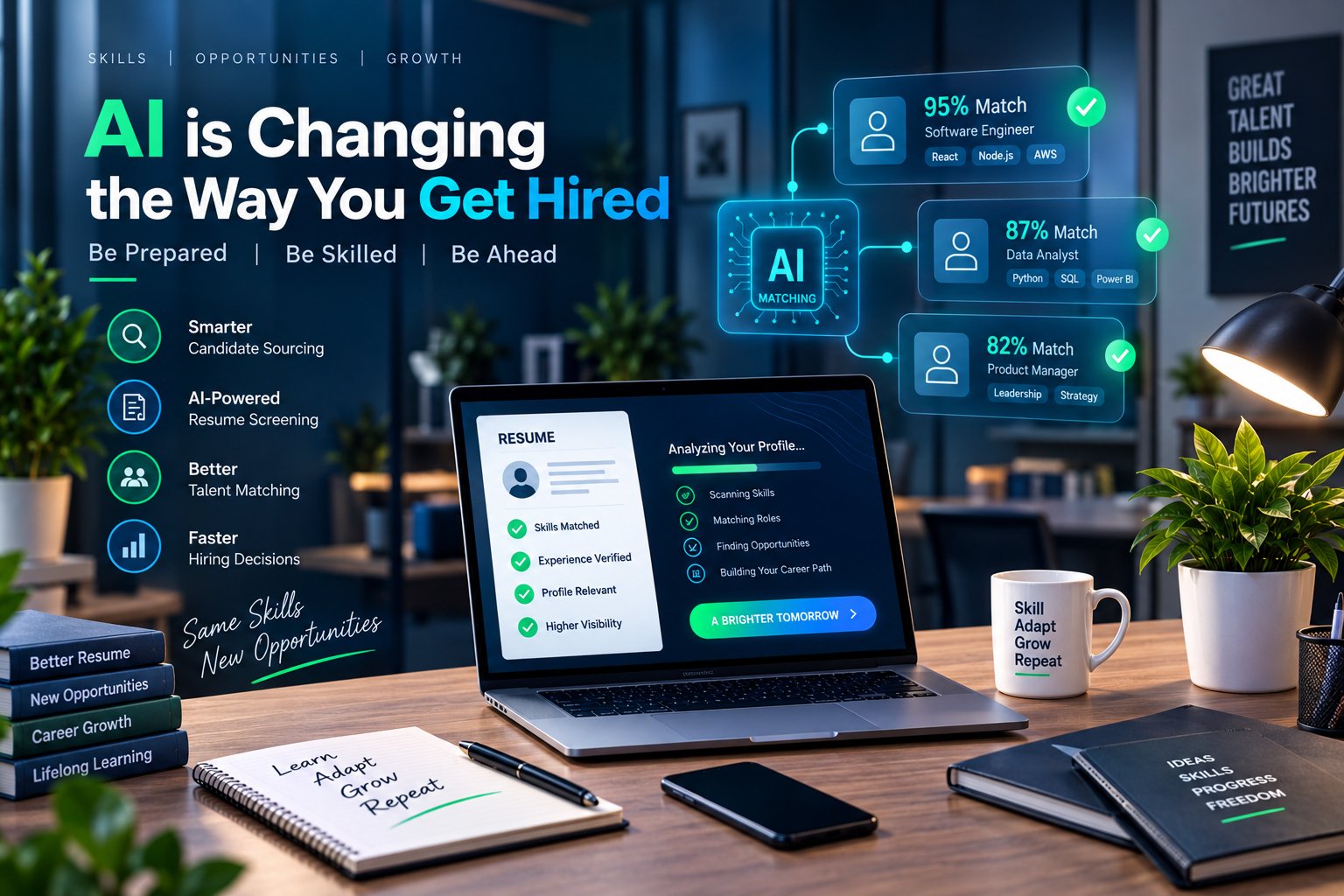
Artificial intelligence is quickly becoming a major part of how companies recruit, evaluate, and hire talent. In 2026, AI is helping recruiters save time, identify relevant skills, improve candidate matching, and manage hiring processes more efficiently. For professionals, understanding these changes is important because the way companies discover and evaluate talent is evolving. AI is not simply changing recruitment technology; it is changing what candidates need to do to stand out in a competitive job market.
1. AI Is Making Candidate Sourcing Faster
AI is helping recruiters find qualified candidates faster by analyzing resumes, professional profiles, skills, experience, job titles, and other relevant information. Instead of manually reviewing hundreds of applications, recruiters can use AI-powered tools to identify profiles that closely match specific job requirements.
For professionals, this means your resume and online profile should clearly highlight relevant skills, experience, certifications, projects, and measurable achievements.
2. AI Is Changing Resume Screening
Many companies use applicant tracking systems and AI-powered screening tools to review resumes before they reach a recruiter. These systems can compare candidate qualifications with job requirements and identify relevant skills and experience.
Candidates should therefore create clear, relevant, ATS-friendly resumes without relying on excessive keyword stuffing. The best approach is to naturally include important skills from the job description while showing how those skills were actually used in previous roles or projects.
Build a resume that works for both technology and recruiters:
- Create a clear and ATS-friendly resume structure.
- Include relevant technical skills naturally.
- Align your experience with the target job requirements.
- Highlight real projects, achievements, and results.
AI is making recruitment faster and more efficient, but candidates who combine relevant technical skills with strong communication, adaptability, and problem-solving abilities can remain better prepared for the changing hiring market.

JHEX Career Team
AI is increasingly being used to support interview scheduling, candidate assessments, interview preparation, and recruitment workflows. However, technology does not replace the need for strong communication and problem-solving skills. Candidates still need to explain their experience clearly, discuss real projects, describe challenges they faced, explain the solutions they used, and demonstrate the results they achieved.
3. AI Is Supporting Interviews and Candidate Evaluation
Preparing specific examples from your professional experience can make your answers more convincing during interviews. Candidates should be ready to explain their responsibilities, technical decisions, challenges, solutions, and the results they achieved.
Your Skills Matter More Than Ever
AI is helping employers identify candidates based on specific skills rather than relying only on job titles or years of experience. A professional’s technical skills, certifications, projects, tools, and ability to solve real business problems can create opportunities across different roles.


4. Continuous Learning Is Becoming More Important
For professionals, this means continuous learning is becoming increasingly important. Instead of focusing only on your current job title, focus on the skills you can demonstrate and the problems you can solve for an employer.
AI can make recruitment faster and more efficient, but hiring decisions still require human judgment. Recruiters and hiring managers need to evaluate communication, teamwork, adaptability, motivation, leadership, and career potential.
5. Human Judgment Still Matters
Professionals should not try to compete with AI. Instead, they should learn how modern recruitment technology works while strengthening the human skills that technology cannot easily replace.
In 2026, professionals who combine relevant technical skills with strong communication, adaptability, and problem-solving abilities will be better prepared for the changing hiring market.
